The quest for the ultimate display technology is relentless, driving innovation that continuously redefines our visual experience. From the humble CRT to the vibrant OLED, each generation pushes the boundaries of clarity, color, and contrast. Now, a new contender is on the horizon, poised to revolutionize how we interact with our digital world: Micro-LED computer monitors. This groundbreaking technology promises to deliver an unparalleled viewing experience, setting a new benchmark for what we expect from our screens. Imagine monitors with perfect blacks, blinding brightness, and a lifespan that outlasts conventional displays – that’s the future Micro-LED holds for computer monitors.
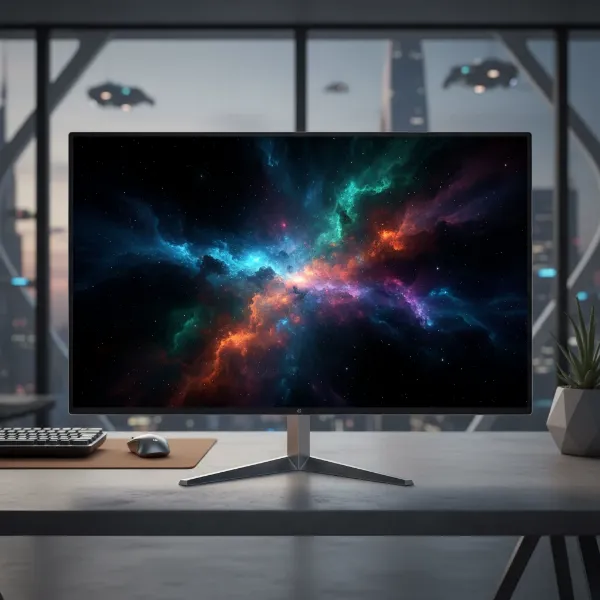 A futuristic Micro-LED computer monitor showcasing vibrant colors and deep blacks.
The Dawn of a New Display Era: Understanding Micro-LED
Micro-LED, short for “micro-light-emitting diode,” represents a radical departure from traditional display architectures. Unlike technologies that rely on backlights or organic compounds, Micro-LED utilizes millions of microscopic, inorganic LED pixels, each capable of emitting its own light and color independently. This self-emissive nature allows for individual pixel control, meaning each tiny LED can be precisely turned on, off, or dimmed to achieve incredible levels of detail and dynamic range. This fundamental difference is what empowers Micro-LED to overcome the inherent limitations of previous display generations, paving the way for a truly next-generation visual experience on your computer monitor.
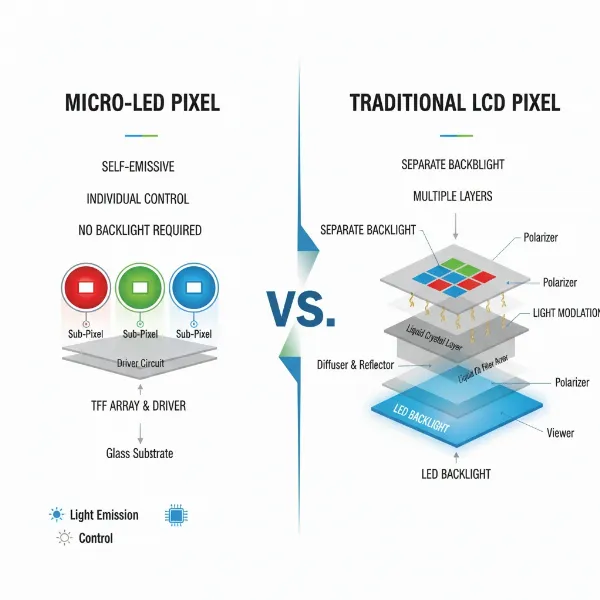 Diagram illustrating microscopic, self-emissive Micro-LED pixels compared to backlit LCD pixels.
Beyond the Horizon: The Unmatched Advantages of Micro-LED Computer Monitors
Micro-LED technology boasts a suite of advantages that position it as the undisputed future for computer monitors, offering advancements across every facet of visual performance and durability.
Unrivaled Visual Fidelity
At the core of Micro-LED’s appeal is its ability to render images with breathtaking fidelity, transforming everyday computing into an immersive visual feast.
- Perfect Blacks and Infinite Contrast: Because each pixel can be individually turned off, Micro-LED achieves true black levels, an absence of light that creates an infinite contrast ratio. This results in images with incredible depth and realism, where dark scenes are truly dark and bright objects pop with stunning intensity.
- Blazing Brightness and HDR: Micro-LED displays are capable of reaching extremely high brightness levels, far surpassing most current technologies without compromising black levels. This capability unlocks the full potential of High Dynamic Range (HDR) content, delivering dazzling highlights and a dynamic range that mirrors real-world vision.
- Vibrant Colors and Wide Gamut: With its direct light emission, Micro-LED produces an exceptionally wide and accurate color gamut. Colors appear more saturated, true-to-life, and consistent across the entire spectrum, making it ideal for creative professionals, gamers, and anyone who values visual precision.
- Exceptional Clarity and Viewing Angles: The ability to pack millions of these tiny LEDs into a small space allows for incredibly high pixel densities. This translates to remarkably sharp and detailed images, even on larger monitor sizes. Furthermore, Micro-LED displays maintain color accuracy and contrast consistency across nearly 180-degree viewing angles, ensuring a pristine picture from virtually any perspective.
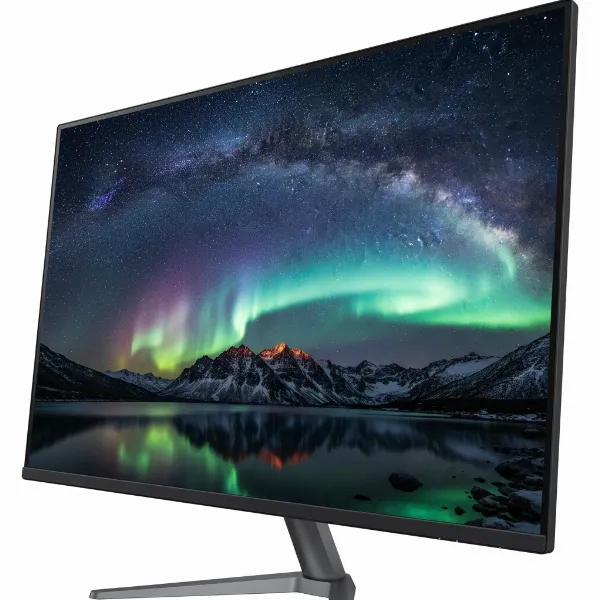 A stunning landscape image displayed on a Micro-LED monitor, demonstrating perfect blacks, high brightness, and wide color gamut.
Superior Performance and Durability
Beyond sheer visual quality, Micro-LED addresses key concerns regarding performance and the longevity of your display.
- Lightning-Fast Response Times: Micro-LED pixels boast nanosecond-level response times, significantly faster than any other display technology. This eliminates motion blur and ghosting, providing an exceptionally smooth and crisp experience for fast-paced gaming, action movies, and dynamic content where every millisecond counts.
- Longevity and Burn-in Resistance: Unlike organic materials found in some displays, Micro-LED utilizes inorganic compounds, making it inherently more robust. This dramatically reduces the risk of burn-in or image retention, even with static content displayed for extended periods. This characteristic contributes to a much longer overall lifespan, making Micro-LED monitors a more durable investment.
- Energy Efficiency: While capable of extreme brightness, Micro-LED can also be incredibly power-efficient. Since each pixel only draws power when it’s actively emitting light, and can be completely off for black areas, these displays consume less energy, especially when displaying content with significant dark elements.
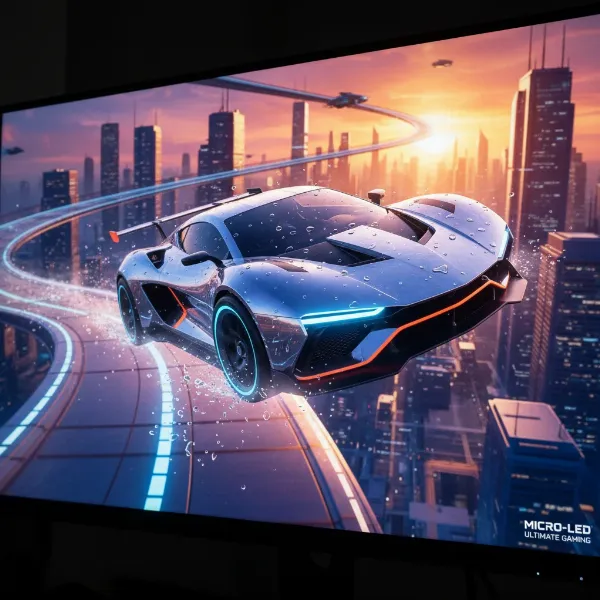 A fast-paced gaming scene on a Micro-LED monitor with no motion blur, emphasizing rapid response times.
Revolutionary Design and Versatility
The underlying architecture of Micro-LED also opens doors to innovative design possibilities for computer monitors.
- Modular Design: Micro-LED panels can be constructed from smaller, seamless modules, allowing for unprecedented flexibility in screen size and shape. This modularity could enable truly bespoke monitor designs, from ultra-wide curved screens to unique multi-panel setups that are virtually bezel-free.
- Slim Form Factors: Without the need for a separate backlight unit, Micro-LED displays can be exceptionally thin, contributing to sleeker monitor designs and a more minimalist aesthetic for your workspace.
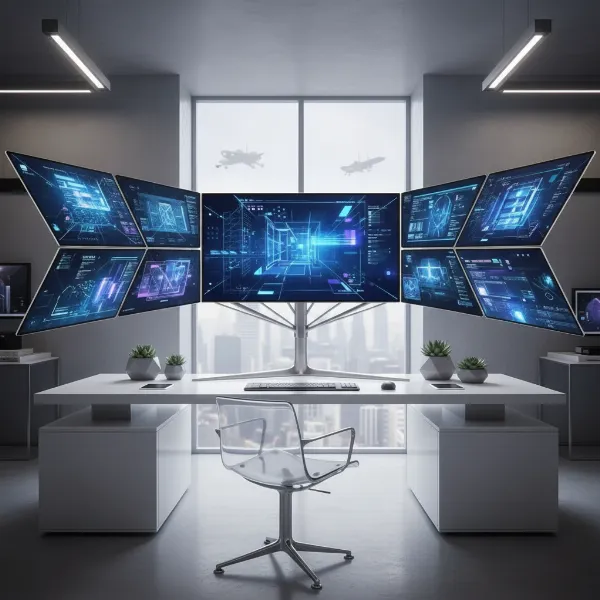 A conceptual image of a modular or ultra-thin Micro-LED computer monitor setup in a modern office.
Current Display Landscape: Micro-LED vs. the Competition
To truly appreciate the transformative potential of Micro-LED, it’s essential to understand how it stacks up against the display technologies currently dominating the market for computer monitors.
Computer Monitor LED (Traditional LCD with LED backlight)
Most “LED monitors” on the market are actually Liquid Crystal Displays (LCDs) illuminated by an LED backlight. These displays use liquid crystals to block or allow light to pass through, creating images. While advancements in LED backlighting have improved brightness and color, they fundamentally rely on light passing through filters, limiting true black levels and contrast.
Computer Monitor LCD
The foundational display technology for decades, LCDs work by selectively blocking light from a backlight. They offer widespread availability and affordability but struggle with achieving deep blacks, maintaining wide viewing angles, and can suffer from “IPS glow” or “VA smearing” depending on the panel type.
Computer Monitor OLED
Organic Light-Emitting Diode (OLED) displays are self-emissive, meaning each pixel generates its own light. This allows for perfect blacks and infinite contrast, similar to Micro-LED. OLEDs offer vibrant colors and incredibly fast response times. However, OLED uses organic materials, which can be susceptible to burn-in over extended periods of displaying static content and may have a shorter peak brightness lifespan compared to inorganic LEDs.
Computer Monitor QLED (Quantum Dot LED)
QLED, primarily popularized by Samsung, is an enhancement of LCD technology. It integrates a quantum dot layer between the LED backlight and the LCD panel. These quantum dots improve color accuracy and brightness significantly, pushing the boundaries of what an LCD-based display can achieve. While QLED offers impressive brightness and a wide color gamut, it still relies on a backlight, preventing it from achieving the perfect blacks and infinite contrast of self-emissive technologies like OLED or Micro-LED.
Computer Monitor Mini-LED
Mini-LED is another evolution of LCD backlighting. It replaces conventional LEDs with thousands of much smaller LEDs, arranged in numerous local dimming zones. This allows for far more precise control over backlight illumination, resulting in significantly improved contrast, deeper blacks, and higher brightness than standard LED-backlit LCDs. Mini-LED narrows the gap with OLED in terms of contrast but still cannot achieve truly perfect black levels where light is completely absent at the pixel level.
“Micro-LED technology fundamentally changes the game by combining the best attributes of existing displays—OLED’s perfect blacks and Mini-LED’s incredible brightness—without inheriting their drawbacks.” – Dr. Elena Petrova, Lead Display Scientist at Innovatech Research
Key Factors When Micro-LED Enters the Mainstream Monitor Market
As Micro-LED continues its journey toward consumer availability, several factors will be paramount for those looking to adopt this revolutionary technology for their computer monitors.
Screen Size and Resolution
The modular nature of Micro-LED is fantastic for massive displays like commercial walls, but scaling it down to typical desktop monitor sizes (24-34 inches) with high pixel density (e.g., 4K or 8K) presents a significant engineering challenge. When Micro-LED monitors arrive, expect varying pixel densities and sizes to hit the market as manufacturing processes mature.
Panel Technology
While all Micro-LED, the specific implementation of its inorganic pixel structure will influence its performance. Consumers will need to look for advancements in pixel density, sub-pixel arrangement, and the integration of precise color control to ensure they are getting the full benefit of the technology.
Refresh Rate and Response Time
Micro-LED inherently offers rapid response times, making it a dream for high-refresh-rate gaming and professional applications. Future Micro-LED monitors are expected to push refresh rates beyond current standards, providing an unbelievably fluid visual experience.
Connectivity
To fully leverage the capabilities of Micro-LED, next-generation display interfaces like DisplayPort 2.1 or future iterations will be essential. These connections will be crucial for handling the massive bandwidth required for high resolutions, high refresh rates, and advanced HDR features that Micro-LED enables.
Other Features
- HDR: Micro-LED’s peak brightness and perfect black levels make it the ultimate platform for HDR content, delivering unparalleled visual impact.
- Adaptive Sync (FreeSync/G-Sync): Expect Micro-LED monitors to seamlessly integrate adaptive sync technologies, providing tear-free and stutter-free gaming experiences by synchronizing the monitor’s refresh rate with the GPU’s output.
- Integrated Speakers and Adjustable Stands: While not unique to Micro-LED, these features will continue to enhance the overall user experience, with high-end Micro-LED monitors likely incorporating premium audio solutions and ergonomic stands.
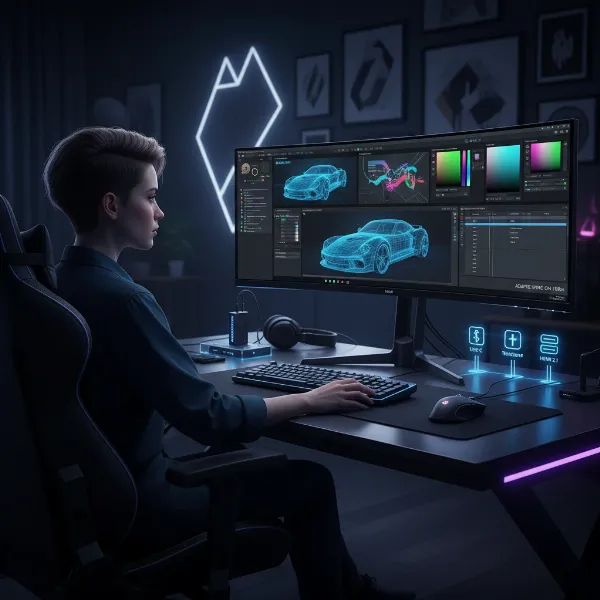 A user interacting with an advanced Micro-LED monitor, highlighting connectivity and high refresh rates.
Comparison of Display Technologies
| Feature | LCD | LED (Backlit LCD) | OLED | QLED (QD-LED) | Mini-LED | Micro-LED |
|---|---|---|---|---|---|---|
| Black Levels | Poor | Poor | Perfect | Good | Excellent | Perfect |
| Contrast Ratio | Low | Low | Infinite | High | Very High | Infinite |
| Brightness | Moderate | High | Moderate | Very High | Extremely High | Ultra High |
| Color Accuracy | Good | Very Good | Excellent | Excellent | Excellent | Superior |
| Response Time | Moderate | Good | Very Fast | Fast | Fast | Nanosecond |
| Burn-in Risk | None | None | Yes | None | None | Virtually None |
| Lifespan | Long | Long | Moderate | Long | Long | Very Long |
| Power Efficiency | Moderate | Good | Excellent | Good | Very Good | Superior |
| Cost (Current) | Low | Low-Moderate | High | High | High | Prohibitive |
| Availability | Widespread | Widespread | Widespread | Widespread | Widespread | Very Limited (Commercial) |
The Road Ahead: Availability and Choosing Your Future Micro-LED Monitor
While Micro-LED’s promise is undeniable, its journey to the consumer computer monitor market is still unfolding.
Current Availability: Beyond Reach (for consumer monitors)
As of now, Micro-LED displays are primarily found in ultra-high-end large-format commercial installations and luxury home cinema screens, with prices often in the hundreds of thousands of dollars. Consumer-grade computer monitors utilizing Micro-LED are not yet widely available. Industry analysts project that it will take several more years for production costs to decrease significantly—potentially by a factor of 20—before Micro-LED can compete with OLED and Mini-LED in the mainstream monitor market.
Navigating the Future Purchase: What to Consider
When Micro-LED computer monitors eventually become accessible, choosing one will be an exciting prospect, but careful consideration will still be key.
- Determine Your Budget: Initially, Micro-LED monitors will likely be premium products. Understanding your budget will help you navigate the early adoption phase.
- Identify Your Core Needs: While Micro-LED offers universal benefits, consider if your primary use—be it professional graphic design, competitive gaming, or general productivity—truly warrants the cutting-edge performance and potential cost.
- Stay Informed: The technology is rapidly evolving. Keep an eye on industry news, product announcements, and reviews to understand the latest advancements in Micro-LED scaling, cost reduction, and feature sets.
- Compare and Contrast: Even in a Micro-LED future, other technologies will continue to exist. Evaluate the specific Micro-LED offerings against the best of what Mini-LED and OLED still provide, considering factors like resolution, refresh rate, and specific features.
Conclusion
Micro-LED technology is not just an incremental upgrade; it represents a monumental leap forward in display science. With its perfect blacks, astonishing brightness, unparalleled color accuracy, lightning-fast response times, and exceptional durability, Micro-LED is poised to redefine what’s possible for computer monitors. While the current hurdles of manufacturing complexity and high cost mean consumer adoption is still a few years away, the relentless pace of innovation suggests a future where these challenges are overcome. The advent of Micro-LED computer monitors promises an era of visual perfection, offering an immersive, vibrant, and utterly responsive experience that will elevate every digital interaction. As the technology continues to mature, we stand on the precipice of a display revolution.
Are you ready for the ultimate visual experience that Micro-LED computer monitors will deliver?
Frequently Asked Questions
When will Micro-LED computer monitors be available to consumers?
Mainstream Micro-LED Computer Monitors are expected to become widely available in several years, likely in the late 2020s, as production costs must significantly decrease to compete with existing technologies. Early luxury models for specific niches may appear sooner.
What is the biggest advantage of Micro-LED over OLED for monitors?
The biggest advantage of Micro-LED over OLED for monitors is its superior brightness capabilities combined with complete immunity to burn-in, thanks to its inorganic LED structure. This ensures a longer lifespan without risk of image retention.
Is Micro-LED susceptible to burn-in like OLED?
Micro-LED displays are virtually immune to burn-in because they use inorganic materials, unlike OLEDs which use organic compounds. This characteristic contributes to Micro-LED’s exceptional longevity and durability.
Why are Micro-LED displays so expensive right now?
Micro-LED displays are expensive due to the immense precision required in manufacturing, specifically the process of transferring millions of microscopic LEDs onto a substrate. Scaling this process to mass production with high yields is currently a significant technical and cost challenge.
How does Micro-LED improve gaming performance?
Micro-LED improves gaming performance with its nanosecond-level response times, eliminating motion blur and ghosting for incredibly sharp and fluid visuals. Its high brightness, perfect blacks, and vibrant colors also create a more immersive and realistic gaming environment.
Can Micro-LED monitors be flexible or transparent?
Yes, Micro-LED technology inherently allows for flexible and even transparent display designs due to its modular nature and the small size of individual LEDs. This opens up possibilities for innovative monitor form factors in the future.